Vintage Fossil Illustrations & Patterns: Natural Design Assets
What Makes This Collection Special
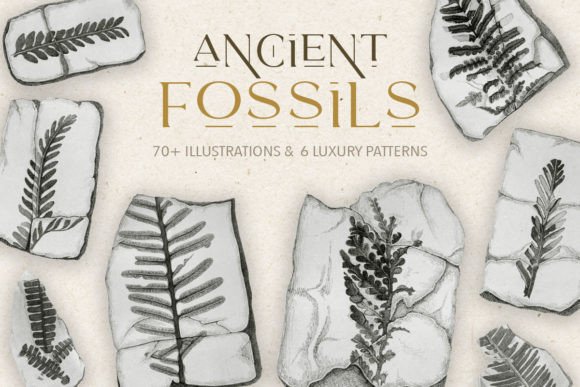
The Ancient Fossils collection brings together more than 70 hand-drawn illustrations that feel genuinely crafted rather than digitally manufactured. You get 29 plant fossils showing various greenery, 5 fossilized animal teeth, over 20 antique botanical sketches in black and white, and another 20+ botanicals rendered in modern muted colors. That range matters because you can mix detailed black-and-white line work with softer colored pieces without the collection feeling disjointed.
What stands out about Vintage Fossil Illustrations & Patterns is the texture. These aren't flat vector drawings with clean edges. The hand-drawn quality shows through in subtle variations, slight imperfections, and organic line weights that give each piece character. When you place these illustrations next to polished modern design elements, they create visual contrast that draws attention without overwhelming your layout.
The 12 seamless patterns included take this further. Each one comes in fully editable PSD files with proper layer organization, plus flattened JPGs for quicker use. A Photoshop .PAT file bundles all 12 patterns along with 2 bonus patterns, which saves time when you're applying them repeatedly across a project. The patterns feature added texture, shadowing, and lighting effects that give them depth beyond what you'd expect from typical pattern packs.
Where These Illustrations and Patterns Work Best
For packaging design, Vintage Fossil Illustrations & Patterns hit a specific aesthetic that's hard to replicate with standard stock graphics. Think artisanal food brands, natural skincare lines, botanical teas, or any product where an earthy natural and neutral design style reinforces the brand story. A soap company, for instance, could use the botanical illustrations as primary packaging artwork while the seamless patterns serve as background textures for boxes and labels. The muted color botanicals pair especially well with kraft paper and natural packaging materials.
Wall art and poster design is another strong application. The individual illustrations work at larger scales because of their high resolution and transparent PNG backgrounds. You can arrange multiple fossil specimens into gallery-style compositions, overlay typography, or let a single detailed botanical illustration anchor a minimalist poster design. Interior designers and home décor brands will find these especially useful for creating prints that feel collected and curated rather than mass-produced.
Fabric and textile design benefits enormously from the seamless patterns. Wallpaper designers, surface pattern creators, and textile studios can use the editable PSD files to adjust colors, scale, and detail levels to match specific production requirements. The patterns hold up well when tiled across larger surfaces because the hand-drawn texture prevents the mechanical repetition that makes many digital patterns look obviously artificial.
For digital projects like website backgrounds, social media graphics, and blog headers, these assets add warmth and authenticity that clean modern typography alone can't achieve. A wellness blogger, a museum gift shop, or an educational content creator could use these illustrations to build a cohesive visual identity across platforms. The transparent PNG format makes layering over photos or colored backgrounds straightforward.
Integrating Fossil Illustrations Into Brand Identity
When building a brand identity around assets like Vintage Fossil Illustrations & Patterns, consistency becomes your biggest consideration. Choose a specific subset of illustrations that represent your brand's visual language rather than using everything available. A botanical-focused brand might stick with the plant fossils and black-and-white sketches, while a more adventurous natural history brand could incorporate the animal teeth and colored botanicals.
Font pairing decisions matter here. The organic, hand-drawn quality of these illustrations works well alongside serif fonts that carry traditional elegance, or clean sans serif typefaces that let the illustrations remain the visual focus. Script fonts and handwritten fonts can complement the collection's personality, but test readability carefully since both the illustrations and decorative typography compete for visual attention. A strong display font for headlines paired with a readable body font usually creates the right hierarchy.
For logo design, individual illustrations from the collection can serve as starting points or supporting elements. A single fossil specimen rendered in a brand's color palette becomes a distinctive mark that competitors can't easily replicate. The key is treating these as design assets rather than final logo artwork—rework, simplify, and adapt them to fit your specific brand requirements.
Editorial design and publishing projects benefit from the collection's range. A cookbook focused on foraged ingredients, a nature journal, an educational textbook, or a magazine feature about paleontology could all use these illustrations throughout. The black-and-white botanicals work especially well for interior page layouts where color printing costs are a concern, while the colored pieces and patterns elevate covers and section dividers.
Commercial licensing considerations deserve attention before committing to any design asset collection. Verify that the license covers your intended use—whether that's client work, products for sale, digital downloads, or merchandise. Most premium illustration collections like this one include commercial use rights, but confirming the specific terms protects you and your clients from unexpected limitations down the road.
Practical Tips for Getting the Most Value
- Start with the seamless patterns for backgrounds and textures, then layer individual illustrations on top for focal points
- Adjust the PSD pattern files to match your brand colors before committing to a visual direction
- Test illustrations at the actual size they'll appear in your final project—some details that look great on screen may not reproduce well at small print sizes
- Use the black-and-white sketches for projects with limited color palettes or single-color printing
- Combine fossils from different categories (plants and teeth together) to create natural history compositions that feel authentic
Working With Seamless Patterns in Real Projects
The editable PSD format of the seamless patterns gives you control that flattened JPGs simply cannot. You can isolate specific texture layers, adjust shadow intensity, modify color overlays, and resize elements without degrading the overall pattern quality. This matters for professional work where a client might request color adjustments or where production specifications demand specific DPI values or color profiles.
The .PAT file installation takes seconds in Photoshop, and having all 14 patterns (12 plus 2 bonus) available directly from the patterns panel streamlines your workflow considerably. When you're building mockups, testing layouts, or presenting options to clients, quick pattern application saves meaningful time across a project timeline.
For print and packaging design specifically, pay attention to how the patterns tile at your intended print size. What looks seamless on screen might reveal subtle repetition at larger scales. The texture and shadowing built into these patterns help disguise tiling, but running a test print or generating a large-scale digital preview catches issues before production.
Vintage Fossil Illustrations & Patterns ultimately serves designers and creatives who need nature-inspired assets with genuine character. The collection bridges antique botanical illustration traditions with modern design requirements, giving you assets that feel timeless without looking dated. Whether you're building a brand from scratch, refreshing an existing visual identity, or adding depth to a specific project, this collection provides the raw material to work with.