Whimsical Greenery: Using Funny Potted Plant Illustrations
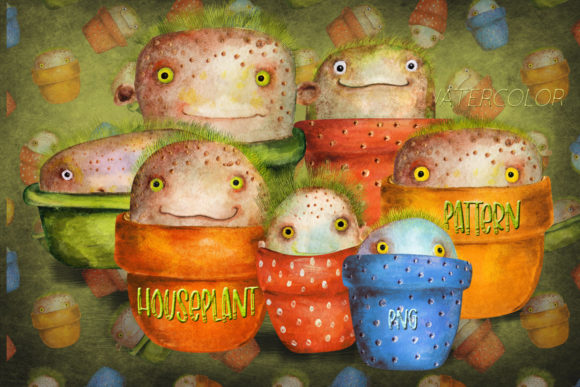
Every designer eventually hits a wall where standard icons and stiff graphics just don’t convey the warmth or humor a project needs. If you are working on a brand that prides itself on being approachable, organic, or just plain fun, the "Illustrations of Funny Potted Plants" collection offers a specific solution. This is not your average stock imagery. It is a curated set of 9 PNG files featuring cute, character-driven creatures housed in plant pots. Rendered in watercolor paints with a transparent background, these assets bridge the gap between professional polish and hand-crafted charm. For those building a brand identity or designing packaging, these illustrations provide that elusive "human touch" that resonates with audiences ranging from hobbyists to serious gardeners.
The Visual Language of Watercolor Charm
What makes this collection stand out is its specific aesthetic. The "Illustrations of Funny Potted Plants" are painted with watercolor textures, which immediately softens the visual experience. Unlike flat vector graphics, watercolor brings depth, bleed, and texture, making the images feel tactile. At a massive 5000x5000 pixels at 300 DPI, the resolution is high enough for large-scale print applications without losing the fine details of the brushstrokes.
The personality of these assets leans heavily into the "cute" and "whimsical." These aren't just botanical drawings; they are characters. This makes them incredibly useful for projects that need to tell a story or evoke an emotional response. The transparent PNG format means you can drop them onto any background—whether it’s a textured paper, a solid brand color, or a photograph—without worrying about awkward white boxes or clipping paths. This flexibility is a massive time-saver in web design and editorial design.
Strategic Applications for Designers and Entrepreneurs
When you are building a visual asset library, versatility is king. The "Illustrations of Funny Potted Plants" serve as excellent design assets across a variety of mediums. Here is how different professionals can leverage them:
- Small Business Owners & Packaging: If you sell artisanal goods, candles, or organic products, these illustrations can decorate your labels. A funny plant character on a coffee bag or a tea tin creates instant shelf appeal and communicates a friendly vibe.
- Bloggers & Content Creators: Use them as spot illustrations within long-form articles to break up text or as unique social media graphics. They work exceptionally well as Instagram stickers or header images for newsletters about lifestyle, gardening, or mental health.
- Print-on-Demand: Because the files are high-resolution (5000x5000 px), they are ready for merchandise. Think tote bags, greeting cards, or mugs. The watercolor style translates beautifully to physical products, giving them a premium, artistic feel.
Even in corporate environments, these illustrations can soften a presentation or an internal newsletter, making the content more digestible and engaging.
Integrating Illustrations with Typography
A common challenge when using ornate or playful illustrations is finding the right font pairing. You want to avoid visual competition. Since the "Illustrations of Funny Potted Plants" have a hand-painted, organic feel, they pair best with clean typography.
Consider using a sans serif font for body text to ensure readability and let the illustrations do the heavy lifting in terms of personality. For headings, a handwritten font or a script font can complement the watercolor style, but be careful not to go too over-the-top. If the illustration is detailed, the text should be simpler. If you are creating a logo, ensure the illustration doesn't overshadow the legibility of the brand name. The goal is visual hierarchy—the eye should know where to look first.
Technical Workflow and File Management
Efficiency in design workflows often comes down to file compatibility. The collection includes PNG and PSD files, which covers the two most common workflows. The PNGs are ready for drag-and-drop use in Canva, Procreate, or Affinity Designer. The PSD files are invaluable for Adobe Photoshop users who might want to tweak layers or adjust the color saturation to match a specific brand identity palette.
The inclusion of a pattern file (5000x5000 px) is a significant bonus. Creating seamless patterns can be tedious, so having a pre-made watercolor pattern allows you to create backgrounds for websites or stationery instantly. It ensures visual consistency across a project, reinforcing brand recognition without repetitive manual work.
Evaluating Project Fit and Licensing
Before purchasing or using any commercial font or asset, you must evaluate the fit. Ask yourself: Does this style match my audience? If your target demographic is corporate law firms, whimsical watercolor plants might confuse your messaging. However, if you are targeting parents, educators, eco-friendly brands, or the wellness industry, these illustrations are a perfect match.
Always review the commercial licensing details. Since these are described as "exclusive and original," you are likely paying for the assurance that your design won't look like everyone else's. This is crucial for logo design and product packaging where uniqueness translates to perceived value. Ensure the license covers your intended use, whether it's for digital products or mass-produced physical goods.
Ultimately, the "Illustrations of Funny Potted Plants" are more than just decoration; they are tools for storytelling. They allow you to inject personality into a project quickly and effectively, bridging the gap between a blank canvas and a finished, engaging design.